
悟空传
Official video shows how PLA Army portable missiles, coordinated with air defense systems, can target stealth fighters_我的网站

A |
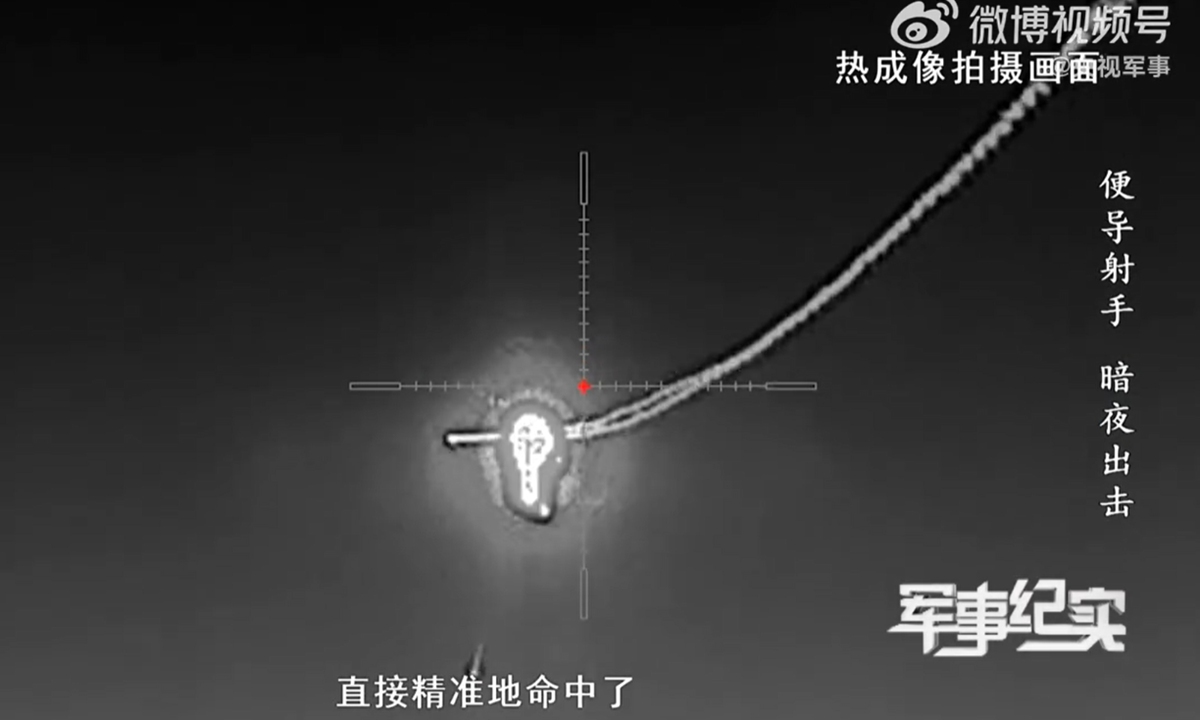
An expert said this example demonstrates the PLA's capability to counter high-value targets with low-cost equipment through systematic coordination, noting this tactic would be a good addition to the broader system of the PLA's anti-stealth capabilities.
During the live-fire verification exercise featured in the CCTV News military channel video, teams conducted coordinated firing using man-portable air-defense systems (MANPADS) and HQ-16 air defense missiles. The HQ-16 engaged the majority of incoming targets, leaving the stealth fighter to the portable missiles.
The video explained that in real combat, large air defense missiles are mostly radar-guided, but radar has difficulty detecting stealth fighters, which is precisely why stealth aircraft can operate with near impunity. Portable missiles, however, use infrared guidance that tracks heat sources, which can actually increase the probability of detecting such targets.
The use of infrared guidance to strike stealth aircraft also drew attention in early 2026. In March, Iran reportedly shot down an F-35 fighter, with analysis suggesting that Tehran likely used infrared detection technology to hit the aircraft, challenging the myth of the F-35's stealth invincibility.
However, using portable missiles to shoot down stealth fighters is no easy task, said the CCTV video. Due to their much shorter range compared with large air defense missiles, the operators must quickly move to positions where the stealth fighter is likely to appear and launch the missiles when the aircraft is closest to them.
Moreover, this type of engagement requires extremely high synchronization between the two operators. Since portable missiles are infrared-guided and highly sensitive to heat sources, if the launches are not synchronized, the later missile might lock onto the earlier one as a target, the video explained.
The video noted that the two operators had been conducting synchronization training and are now fully ready. Upon command, two missiles streaked across the night sky and simultaneously struck the target drone with precision.
The portable missile unit's flawless performance marked the completion of its first experimental tactical exercise, making it possible to use portable missiles against stealth fighters on future battlefields, commented the video.
This coordinated drill demonstrates that through proper coordination within the air defense system, low-cost equipment can indeed unlock new combat value and pose a certain counterbalance to high-value stealth targets, Song Zhongping, a Chinese military affairs expert, told the Global Times on Sunday.
To detect stealth targets, the HQ-16 field air defense system requires multiple detection units to conduct continuous, uninterrupted scanning of the same direction. This multi-static array deployment can exploit loopholes in stealth, such as the fact that stealth is not omnidirectional. Therefore, making use of multi-directional detection can increase the probability of finding a target. Portable missiles, meanwhile, serve as an important supplement to the radar-guided system. The combination of the two can indeed engage stealth targets, Song explained.
Song also noted that this shows the mature nature of the PLA's data link and information fusion systems. However, as the video shows, this is no easy feat, it requires a high degree of coordination and skilled operational techniques.
The expert also emphasized that using portable missiles against stealth fighters is just one part of the PLA's anti-stealth system. There are other non-MANPADS infrared-guided missiles and other guidance mechanisms that also contribute to anti-stealth capabilities.
Anti-stealth capability development is a multi-channel, multi-dimensional systems engineering effort. At the detection level, in addition to multi-band radar deployment, other technical approaches include passive radar, lidar and future quantum radar, all of which can effectively detect and lock onto stealth targets. Meanwhile, airborne early warning aircraft represent another critical component of the PLA's anti-stealth capability, providing surveillance and command guidance over a wider airspace, Song said.
This multi-dimensional integrated anti-stealth capability is a key direction for future air defense system development, Song added.
。

B | 讯 青岛海关发布数据显示,2026年前7个月,山东省进出口2.12万亿元,同比增长4.3%。其中,出口1.26万亿元,增长1.8%;进口8607.5亿元,增长8.1%。7月份当月,山东省进出口3147.8亿元,增长2.8%。其中,出口1921.8亿元,增长1%;进口1226亿元,增长5.6%。

C | 前7个月山东省进出口主要特点有: 一是全省9市进出口增长,济南、东营、潍坊实现两位数增长。

D | 前7个月,山东省有9市进出口保持增长,其中青岛进出口5548.7亿元,增长6.4%,占全省进出口总值的26.1%。

E | 济南、东营、潍坊实现两位数增长,增速分别为27%、15.8%、10.3%。 二是一般贸易占比超6成,保税物流快速增长。前7个月,山东省一般贸易进出口1.33万亿元,下降0.7%,占全省进出口总值的62.6%。同期,保税物流进出口4155.6亿元,增长21.4%;加工贸易进出口3152.4亿元,增长6.1%。

F | 三是民营企业、国有企业进出口增长。前7个月,山东省民营企业进出口1.63万亿元,增长5.3%,占全省进出口总值的76.8%。同期,外商投资企业进出口3009.4亿元,下降1.5%;国有企业进出口1912.7亿元,增长4.5%。 四是对东盟、俄罗斯进出口保持增长。前7个月,主要贸易市场中,山东省对东盟、俄罗斯分别进出口4135.4亿元、2007.6亿元,分别增长4.3%、44%。同期,对共建“一带一路”国家进出口1.36万亿元,增长3.8%,占进出口总值的64%。 五是“新三样”、钢材出口增速明显。前7个月,山东省“新三样”产品出口93亿元,增长26%。其中,电动汽车出口57.5亿元,增长22.4%;锂离子蓄电池出口22.4亿元,增长23.4%;光伏产品出口13.1亿元,增长50.6%。此外,农产品、基本有机化学品、钢材分别出口989.5亿元、528.9亿元、423.5亿元,分别增长4.6%、19.4%、33.7%。 六是原油、金属矿砂、农产品进口值增长。前7个月,山东省原油进口2568.8亿元,增长7%,占全省进口总值的29.8%。同期,金属矿砂进口1793.6亿元,增长13.2%。

G | 其中,铁矿砂、铜矿砂、贵金属矿砂分别进口651.5亿元、417.4亿元、293.9亿元,分别增长36.9%、8.4%、37.8%。

H | 此外,农产品进口959.4亿元,增长10.1%。其中,食用水产品进口210.2亿元,增长26.5%。版权申明:凡注有“”或电头为“”的稿件,均为独家版权所有,未经许可不得转载或镜像;授权转载必须注明来源为“”,并保留“”的电头。 。
Current article:http://vi7ins8.zongchaeiwengshuabaisisuofu.sbs/list_qdz5ap4/n79zm.html
Published on:08:10:36


