悟空传
Baltic Sea Will Become ‘NATO Basin’ After Nordic Nations’ Accession to Alliance, Polish Prez Says_我的网站

A | The Baltic Sea will become an “internal basin” of the NATO bloc after Finland and Sweden join the alliance, with every country bordering the sea barring Russia and its exclave of Kaliningrad to be part of the alliance, Polish President Andrzej Duda has boasted.,“The Baltic sea is essentially poised to become NATO’s internal basin. Two very powerful nations with a long and strong military tradition will become part of NATO soon, extending the Russia-NATO border by 1,400 kilometers, which is no doubt bad news for Russian authorities,” Duda said during a meeting of Poland’s security council on Monday.,Expressing hope that Finland and Sweden are accepted quickly and that their membership is ratified by NATO’s 30 members, Duda stressed that there was “no need for an explanation on how important this decision is for us.”,Late last week, Russian deputy foreign minister Alexander Grushko called the push to incorporate the pair of Nordic countries into the Western alliance “one of the saddest episodes in the evolution” of Europe’s security architecture, and warned that Moscow will be forced to beef up its defenses to compensate for new threats.,“This will severely worsen the military situation in the Baltic Sea region, which, as a result of NATO’s expansion…would be turned into an arena if not of military confrontation, then completely unnecessary military rivalry,” Grushko said.,Russian President Vladimir Putin warned last Wednesday that although Moscow does not have the same type of “problems with Sweden and Finland” as it does with Ukraine, the two countries “should plainly and clearly realize that [while] there were no threats before, now, if military contingents and infrastructure are deployed there, [Russia] will have to respond in a mirror fashion.”,Mayor of Finland's Border Town Mulls Placing NATO Base Directly on Russia's Doorstep3 July, 12:48 GMT,Finland and Sweden completed accession talks at NATO headquarters in Brussels on Monday, with the bloc indicating in a statement that “both countries formally confirmed their willingness and ability to meet the political, legal and military obligations and commitments of NATO membership.” Allies are due to sign accession protocols on Tuesday, after which they will go out to all 30 member countries for ratification.,The pair of Nordic nations broke with generations of neutrality by announcing their bids for NATO membership this spring after Russia began its military operation in Ukraine. Until now, Sweden had maintained strict bloc neutrality since the 19th century, and has not taken part in any large-scale war in Europe since 1814. Finland became neutral at the start of the Cold War, and continued this policy for decades after 1991.,Swedish PM Refuses to Say if Stockholm Will Deport Kurds Wanted in Turkey as Part of NATO DealYesterday, 11:38 GMT,The countries’ neutrality did not prevent them from leaning in NATO’s direction after the collapse of the USSR and the Eastern bloc. They joined the Western alliance’s ‘Partnership for Peace’ program in 1994, and took part in the US-led occupation of Afghanistan, as well as 'peacekeeping' operations in the Serbian breakaway region of Kosovo after 1999. Both countries’ armies, navies and air forces also regularly take part in NATO-led military exercises in the region.,The planned incorporation of Finland and Sweden into NATO is the latest round of the bloc’s eastward push. Since 1990 and Secretary of State James Baker’s famous “not one inch east” promise to Soviet General Secretary Mikhail Gorbachev, the Western bloc has undergone three major waves of eastward expansion, swallowing up the Czech Republic, Hungary and Poland in 1999, Bulgaria, Romania, Slovakia, Slovenia and the Baltic states in 2004, and Albania, Croatia, Montenegro and North Macedonia between 2009 and 2020. After Finland and Sweden’s accession, there will be just nine countries in Europe, Russia included, that are not part of the US-led North Atlantic alliance.,German Lawmaker Reveals How NATO Fooled Gorbachev About Bloc’s Eastward Expansion Plans31 January 2020, 16:43 GMT。
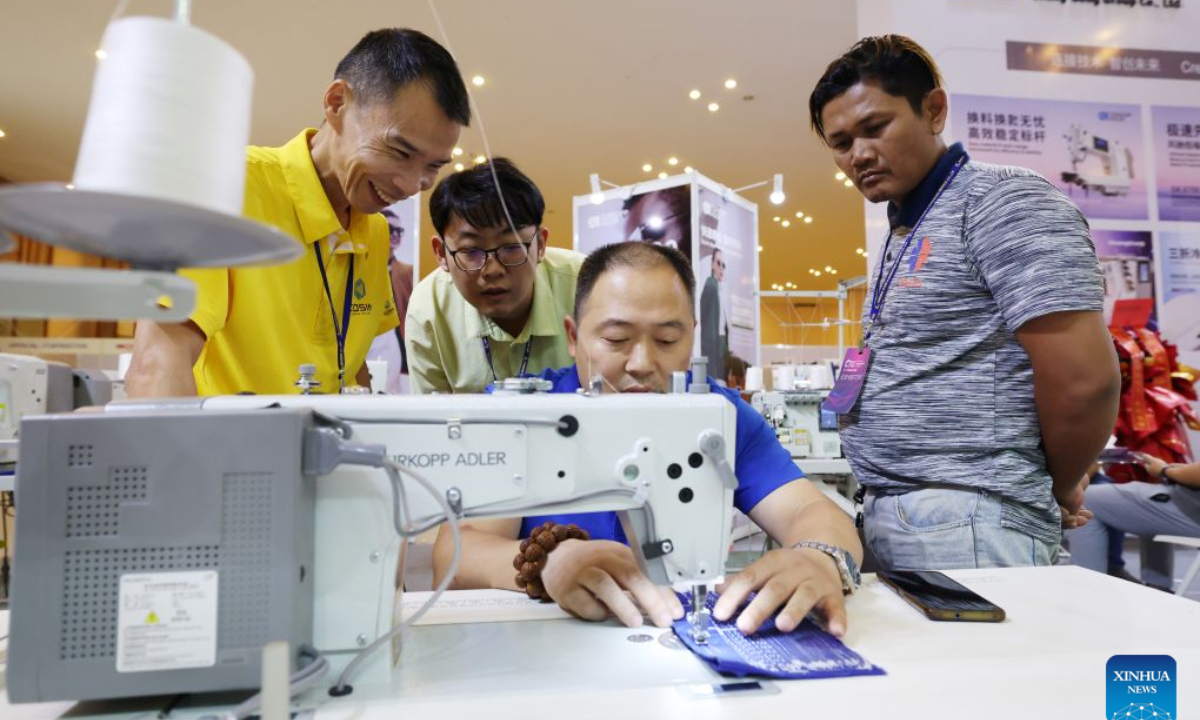
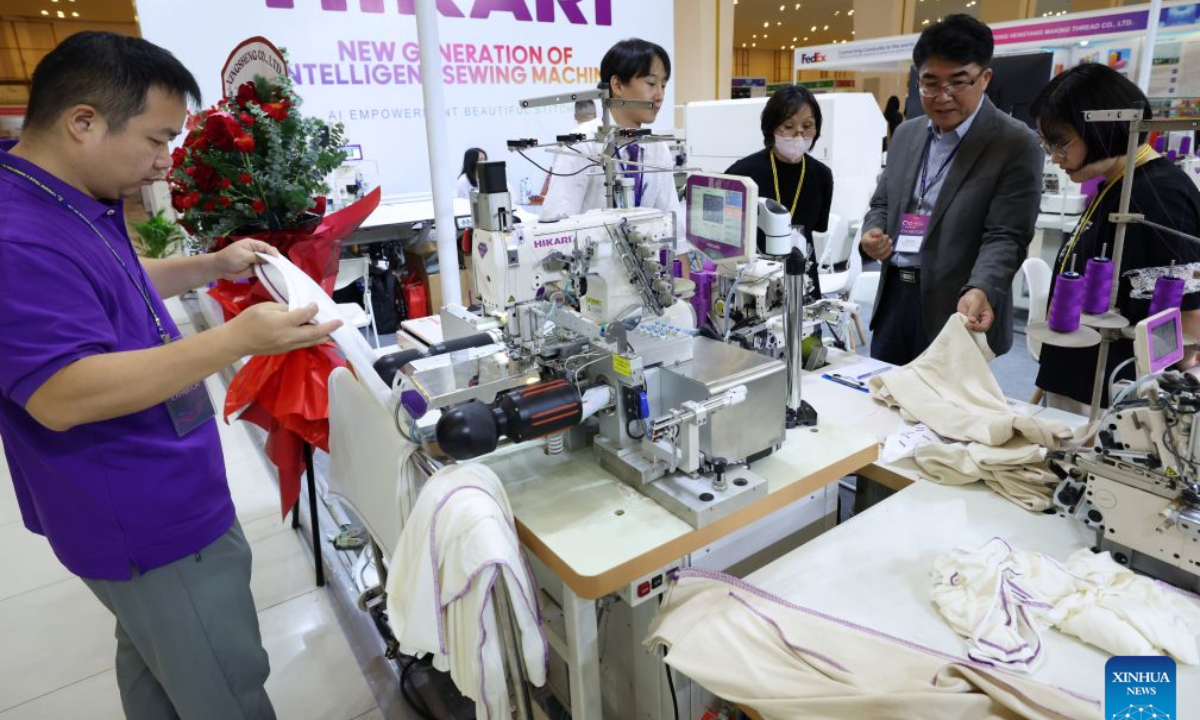
The four-day expo, which runs from Thursday to Sunday, features more than 200 local and international exhibitors.
A significant portion of these participants comprises Chinese companies across four core sectors: machinery and automation, textiles and garments, plastics and rubber, and printing and packaging.
Organized by Yorkers Trade & Marketing Service Co., Ltd. in collaboration with the Ministry of Industry, Science, Technology & Innovation, the expo provided a platform to showcase emerging industrial technologies, foster business connections and support the modernization of Cambodia's manufacturing sector.
According to official ministry data, Cambodia had 3,357 operational factories as of July 2026. These facilities employ over 1.35 million workers, more than 70 percent of whom are women.
Total factory investment in the kingdom reached approximately 28 billion U.S. dollars, a 29 percent increase compared to the same period in 2025. Additionally, industrial production during the first half of 2026 was valued at over 9.8 billion dollars, including roughly 7.3 billion dollars in goods manufactured for export.
Cambodian Minister of Industry, Science, Technology and Innovation Hem Vanndy urged Cambodian enterprises to embrace advanced technologies to boost productivity, improve quality, and sharpen their competitive edge.
"Artificial intelligence, production-line automation, robotics, digital technologies and smart manufacturing are increasingly determining the competitiveness of nations," he said during the expo's opening ceremony on Thursday.
"Cambodia cannot remain outside this transformation," Vanndy said. "We must embrace new technologies to increase productivity, reduce costs, improve product quality and strengthen the competitiveness of our enterprises."
Chim Vinly, the expo's organizing staff member, said the exhibition plays a vital role in introducing innovative manufacturing technologies to Cambodia's garment sector, as attendees can explore a diverse range of advanced machinery designed to elevate production standards.
"Most exhibitors represent the textile and garment industries, with the majority being local and Chinese companies," he told Xinhua on Saturday.
"These advanced manufacturing tools have boosted productivity and modernized local production chains. In particular, they make work faster and more efficient," he added.
Vinly said the annual event plays a vital role in further expanding bilateral trade between China and Cambodia.
"Chinese investment is crucial to boosting Cambodia's economic growth and generating job opportunities for the local workforce," he said.
Bo Seyma, a mechanic at Kosin Sewing Machine Co., Ltd., which supplies Cambodian factories with equipment from the Shanghai-based Shang Gong Group, said the expo is vital for showcasing cutting-edge machinery to the local garment industry.
He said the Kosin company is promoting sewing, embroidery, button, and backstitching machines, along with other equipment, to factories in Cambodia.
"These industrial machines are in high demand, with numerous factories placing purchase orders with our company," he told Xinhua on Saturday.
Seyma said these advanced machines are high-quality and built to last.
"These machines accelerate production efficiency while effortlessly meeting customer demands," he said.
Thong Mengdavid, deputy director at the China-ASEAN Studies Center of the Cambodia University of Technology and Science, said that Cambodia, a country heavily dependent on textiles and garments, has seen its cooperation with China evolve from providing raw materials like fabrics and finished consumer goods toward technological cross-pollination.
This allows local Cambodian plant managers and entrepreneurs to evaluate high-grade machinery directly, he added.
"Integrating China's technology, machinery, and tools into Cambodian factories will address several challenges in the local economy, such as enhancing output per hour, reducing material waste caused by human error, and fostering skill development among the workforce," Mengdavid said.
。
Current article:http://vi7ins8.zongchaeiwengshuabaisisuofu.sbs/news/20260826_47494.html
Published on:17:30:15


1
성평등위서 檢 보완수사권 폐지 공방…여 "검찰 권력 통제" 야 "약자 피해 우려"2
小轴承“转”出大产业3
新思想引领新征程丨优质医疗资源下沉惠民 绘就健康中国新图景4
奥克股份:上半年净利润6153.97万元,同比增长4621.13%5
恒生科技指数跌幅扩大至3%6
专利出海交易爆发,中国创新药成为“全球合伙人”7
休闲手游融合合成玩法:从放松到养成的破局之道8
开展适龄儿童脊髓灰质炎灭活疫苗补种工作9
Fun fact: Will this cloud rain?10
维维亚诺:米兰选择了一位出色教练,阿莫林已证明自己能成就大业11
被批投资太空旅行而不帮忙解决地球问题 贝索斯:我们去太空就是为了保护它12
阪神 藤川球児監督と新庄剛志監督が笑顔で話し込む メンバー交換でハイタッチ スタンドの大歓声には思わず藤川監督が笑み13
微软Swiftkey输入法Android版本更新:三种新语言,集成必应搜索14
外媒:载有伊朗总统飞机暂无伤亡报告 机上人员曾打紧急电话15
摩根士丹利:五大云巨头与英伟达等AI相关表外承诺超3.1万亿美元
- 随机推荐
1
泉州市第七届残疾人职业技能竞赛举办2
中秋国庆热度攀升 成都跻身中秋国庆酒店“提前订”热门城市榜首3
APEC host city Shenzhen offers glimpse of China's future industries4
生态环境部:深入推进土壤污染源头防控,力争完成8万个行政村环境整治5
从10年到4.5年 “钱塘造”创新药 怎么把研发时间砍掉一半多?6
大河之上群鸟蹁跹 游人悠闲置身安澜画卷7
美国将于2023年推行面向IoT设备的网络安全标签计划8
全国每卖出3只箱包,就有1只来自这里!白沟太能“装”了!,全国每卖出3只箱包,就有1只来自这里!白沟太能“装”了!9
China sends an envoy to the Middle East in a sign of its ambition to play larger role10
微软澄清Office品牌不会消失 单机版还会继续提供11
Delhi Court extends interim bail of Jacqueline till Nov 1012
巨大丑闻!曝中国足协3人曾接受韩国性贿赂,官方未回应13
Immersive heritage shows draw visitors to Tianmen Mountain in Hunan14
国家防总办公室、应急管理部向河南紧急调拨中央防汛物资 支持做好抗洪抢险工作15
科信技术:拟转让全资子公司深圳君科持有的参股公司比科奇2.0015%股权